

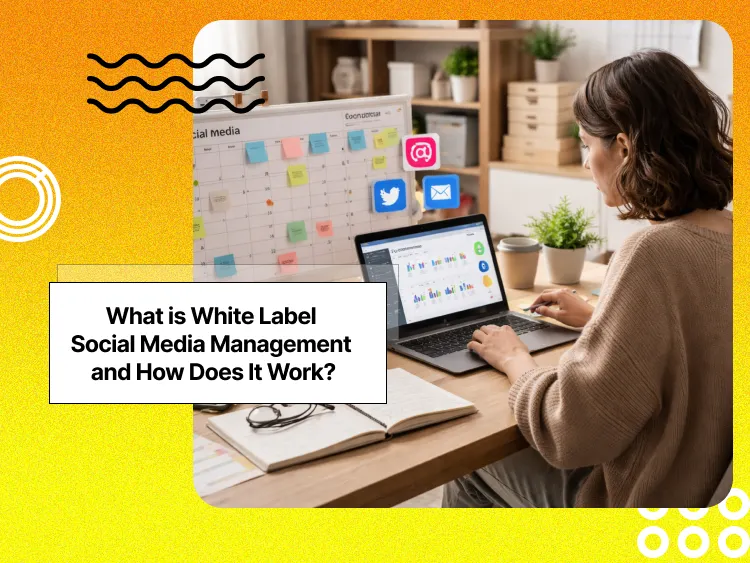
Managing clients’ social media in-house can be costly, time-consuming, and overwhelming. You don’t need a full in-house team to manage your clients’ social media. White-label social media management services let agencies deliver expert results under their own brand.
This service helps businesses to outsource their social media efforts to experts; it’s a solution that transforms how marketing agencies operate.
Whether you’re looking to scale your agency or add social media to your portfolio without hiring specialists, white labeling offers a strategic pathway to growth.
Buy an Established Instagram Account
Skip starting from zero. Browse Instagram/TikTok accounts with audiences across many niches.
See Available AccountsWhat Is White Label Social Media Management?
White label social media management is when you outsource your social media services to a specialized provider who handles everything behind the scenes. Still, it’s all presented as if it’s coming directly from your agency.
Take major brands, for example; their CEOs aren’t writing every post. Behind the scenes, dedicated teams or agencies handle their social media presence.
They assign the job to expert individuals who know how to create content that looks and feels like it’s your own—branded with your logo, voice, and style—so your clients never know the difference, including insights on what a digital creator does and how they craft content.
In the case of social media, things like content creation, posting, community engagement, and reporting are all taken care of, while you get to deliver it to your clients as your work.
Recent data shows that more than 60% of digital agencies now rely on some form of white label service, with social media management being one of the most popular areas to outsource.
How White Label Social Media Management Works?
Let’s break this down into three parts for a clearer understanding.
How content creation works behind the scenes
The content creation process is a collaboration between your agency and the white label provider.
First, the provider learns about the client’s brand and goals during onboarding. They might use questionnaires or review existing guidelines to ensure alignment.
Next, they plan content calendars 2-4 weeks ahead, which your team reviews and approves to ensure it fits with marketing campaigns and seasonal trends.
Then comes content production, everything from writing captions to designing graphics. Tools like Asana or Monday.com help keep things organized, with clear review and revision cycles.
Once approved, the white label provider schedules and posts the content, giving your agency final control through shared login credentials.
Branded client reports and analytics
Client reporting is a key benefit of white label partnerships. Your provider offers the following for effective collaboration:
- Monthly performance reports with your branding
- Custom dashboards that clients can access via your portal
- Analytics tracking engagement, reach, and conversions
- Competitive benchmarks to put results in context
- Strategy recommendations based on the data
Most white label providers use tools that automatically create professional reports with your logo and colors. Some even offer ready-to-go presentation slides, so your team has polished materials for client meetings without the extra effort.
Seamless communication
Your agency designates an account manager as the main point of contact to keep everything running smoothly.
Regular check-ins (weekly or bi-weekly) help ensure alignment on client needs and upcoming tasks.
These meetings usually cover:
- Content performance from the previous period
- Upcoming content plans and approvals
- Client feedback and requested changes
- Strategy recommendations based on data
Most white label partners have clear escalation procedures, so problems get resolved without disrupting the client experience.
Different Types of White Label Social Media Solutions
White label social media solutions come in several types, each designed to meet different business needs, which helps businesses choose a suitable service.
- Content creation and management: Providers create social media posts, graphics, and videos branded with your agency’s name.
- Social media advertising: Providers manage paid campaigns, including ad creation, targeting, and optimization.

- Community management: Providers handle engagement by responding to comments and messages on social media.
- Analytics and reporting: Providers deliver branded performance reports, tracking key metrics like engagement.
- Social media strategy: Providers develop a tailored social media strategy that aligns with your client’s goals, including guidance on finding and hiring the right influencers for campaigns to maximize reach and engagement.
What Are White-Label Social Media Tools and Technology?
The best white-label providers use powerful tools to manage content, scheduling, and communication.
With the right technology in place, collaboration between your agency and your partner becomes much smoother, and agencies can also explore solutions to buy ready-to-go Instagram accounts to jumpstart campaigns.
Necessary platforms for efficient content delivery
- Content Management Systems (like Sprout Social, Hootsuite, or Buffer) for scheduling posts and keeping both teams aligned on content calendars, with customizable access roles to maintain control.
- Asset Management Solutions (such as Brandfolder or DAM platforms) to store approved images, videos, and brand assets, ensuring easy access for your partner.
- Approval Workflow Tools (like Planable or ContentCal) to streamline the review process with comments, version tracking, and status updates, reducing delays.
- Communication Platforms (like Slack or Microsoft Teams) for organized, searchable conversations to keep all details in one place and avoid confusion.
Many top white label partners also offer branded client portals, creating a seamless experience.
Analytics and reporting software for client dashboards
- Automated Reporting Systems (like Databox or Agency Analytics) to gather data across platforms and display it in branded dashboards.
- Competitive Intelligence Tools (such as Rival IQ or Brandwatch) for performance comparisons against industry benchmarks and competitors.
- Custom Goal Tracking to measure metrics that align with your client’s specific goals, not just followers or likes.
- Attribution Modeling to link social media efforts to website traffic, leads, and sales, showing clear ROI.
Top partners provide automated reports and expert analysis, helping you understand the numbers and adjust your strategy as needed.
Key Differences Between Standard and White Label Management
Standard social media management is when your in-house team or contractors visibly manage client accounts. Clients know who’s handling their social media, and your agency takes care of all the communication, strategy, and execution.
- White label management, on the other hand, works behind the scenes:
- Clients never interact directly with the service provider.
- Everything, from content to reports, carries your agency’s branding.
- Communication goes through your agency, keeping the client relationship intact.
- Monthly reports and analytics are customized to your agency’s branding, colors, and terminology, focusing on your agency’s expertise.
- The white label provider stays out of sight.
This behind-the-scenes setup lets you offer a full range of services while focusing on what you do best, client relationships and core business functions.
Why Agencies Choose White Label Social Media Solutions?
There are several strategic reasons agencies choose white label social media solutions; here are some of the most important ones:
One of the biggest reasons agencies choose white label solutions is the ability to access expertise right away. Instead of spending months hiring and training social media experts, you can tap into a team of experienced professionals immediately. This is especially helpful for agencies that specialize in areas like web development, SEO, or traditional marketing but want to offer a full range of digital services.
Resource optimization also drives white label adoption. Your existing team can focus on core services while social media execution happens in parallel. For smaller agencies, this prevents the burnout that comes from trying to manage multiple specialized services with limited staff.
Finally, competitive positioning motivates many agencies. In a market where clients expect one-stop solutions, white label partnerships allow you to compete with larger, full-service agencies without the overhead of specialized departments.
Reasons Social Media Managers Need White-label Content
Creating high-quality, unique content isn’t easy for most social media managers; it’s both challenging and time-consuming, which is why learning effective ways to share user-generated content can save time and boost engagement.
That’s why many turn to white-label content to keep up with demand.
Here are a few reasons why it works so well:
Time saving

White-label content allows social media managers to save time by leveraging pre-designed content that’s ready to be customized and posted.
Access to expertise
White-label content is typically created by industry professionals who are experts in crafting engaging and effective social media posts. This ensures that social media managers can offer their clients high-quality content without having to be experts in every niche or field. It’s like getting a head start with professionally created materials that align with current trends and best practices.
Cost-effectiveness
White-label content provides a cost-effective solution, as it’s often more affordable than creating everything from scratch. This is especially useful for agencies or managers working with smaller budgets who still want to provide top-tier content to their clients.
Focus on strategy and engagement
White-label content gives them the freedom to spend more time analyzing performance and refining strategies rather than getting bogged down by content production.
Benefits of White Label Social Media Services
Here are some key benefits of white-label social media services and how they can help your business grow:
1. Expand your service offerings effortlessly
If your agency currently focuses on web design, white-label partnerships let you offer full social media management across multiple platforms, without the cost or hassle of hiring and training new staff.
2. Create easy upselling opportunities
When an existing client mentions struggling with social media, you can offer a ready-made solution instead of sending them elsewhere. This builds trust, deepens client relationships, and increases customer lifetime value.
3. Strengthen your new business pitches
Offering a complete digital package makes your agency more appealing to prospects. Clients prefer working with one partner who can handle everything, rather than splitting their budget between multiple vendors.
How to Choose the Right White Label Social Media Partner?
There are four essential aspects to evaluate before partnering with a white-label social media provider.
Seven questions you must ask
1- What industry experience do you have? Choose a partner with experience in your clients’ industries to ensure relevant and engaging content.
2- Who will manage our accounts? Make sure you’re not assigned to junior staff, and clarify the structure of the team.
3- How do you handle strategy versus execution? Understand whether your agency is expected to handle strategy while the partner focuses on execution.
4- What’s your revision process? Know how many revisions are included and if additional costs apply for more changes.
5- How do you stay current with platform updates? Ensure your partner has processes to adapt strategies in response to changing algorithms and trends.
6- What crisis management procedures do you have? Understand how your partner handles negative comments or controversial issues.
7- Can you provide white-labeled case studies? Ask for examples of measurable results that demonstrate their impact.
Reviewing their work and expertise
- Platform-specific content optimization
- Clear audience targeting and differentiation
- Consistent branding and visual identity
- Also, assess the provider’s adaptability to different brand voices and experience across various industries to ensure they can meet your clients’ unique needs.
Understanding Pricing: flat rates vs. flexible packages
White label pricing typically follows two models:
- Fixed Retainers: Predictable monthly costs, ideal for agencies with stable client needs. Typically range from $1,000-$3,000 per month per client.
- Tiered Packages: Offers flexibility for different service levels, with options based on posting frequency and additional features like community management or influencer outreach.
Some partners may also offer à la carte services for specific needs.
Building a strong white label partnership
Create a simple onboarding process with clear timelines and shared responsibilities. Provide brand guidelines and content examples to ensure consistency. Be upfront with clients about timelines and realistic results, while maintaining clear communication with your white label partner for effective collaboration.
What to Consider When Choosing White Label Services?
Here are some key factors you must consider when selecting white label services for your business:
- Experience and expertise: Ensure the provider has experience in your industry and understands your clients’ needs. What’s the point if you work with a team that is irrelevant to your business?
- Quality and customization: Look for services that offer high-quality, customizable solutions.
- Scalability: Choose a partner that can grow with your business and adapt to changing client demands.
- Communication: Clear and efficient communication is essential for smooth collaboration and timely results. Imagine collaborating with a provider without understanding each other!
- Pricing: Ensure the pricing model fits your budget while offering good value for the services provided.
These considerations will help ensure a successful, long-term partnership.
Top White Label Social Media Management Services
When selecting a white label social media management provider, it’s important to choose services that offer both quality and flexibility. Here are some top white label services to consider:
Cloud Campaign
Cloud Campaign is a white-label social media management platform designed specifically for agencies. The platform offers customizable branding, including white-labeled reports and dashboards, enabling you to present a seamless brand experience to your clients.
Hootsuite
One of the most well-known platforms, Hootsuite offers white label solutions for agencies, including content scheduling, social listening, and analytics. It’s a great option for agencies managing large-scale social media campaigns across multiple platforms.
SocialBee
Known for its ease of use, SocialBee is a white-label service that allows you to schedule, categorize, and repost content across platforms. It’s ideal for agencies wanting to streamline content posting and engagement.
Sendible
Sendible is a white-label social media management platform perfect for agencies looking for robust reporting, client management tools, and scheduling across multiple networks. It’s especially helpful for agencies serving clients with diverse needs.
MixBloom
MixBloom provides a fully white-labeled solution for social media content creation, scheduling, and publishing. Agencies can customize their dashboard with their own branding and domain, offering clients a cohesive experience.
5 Ways White Label Management Reduces Operational Costs
1. Eliminates specialist hiring expenses: The average cost of hiring a social media manager (including recruitment, training, and benefits) exceeds $70,000 annually, a cost you avoid entirely.
2. Removes software investment requirements: Enterprise-level social media tools can cost thousands monthly, but white label partners already have these platforms, spreading the cost across multiple clients.
3. Provides predictable monthly expenses: Unlike variable in-house costs, white label services typically operate on fixed monthly fees, making financial planning more accurate.
4. Decreases management overhead: Your team spends less time on supervision, training, and quality control when working with established social media professionals.
5. Reduces content production expenses: Creating consistent, high-quality social media content requires designers, copywriters, and strategists, resources your white label partner already maintains.
These cost efficiencies can increase your profit margins by 15-25% compared to building equivalent in-house capabilities.
Differences in Price Between White Labeling and Hiring an In-house Social Media Manager
Hiring a white label provider is often more cost-effective than bringing an in-house social media manager on board.
With white label services, you save on recruitment, training, and salary costs while gaining access to a team of experts for a fixed monthly fee.
In contrast, hiring in-house requires ongoing salaries, benefits, and the overhead costs of managing an employee.
For many agencies, white labeling offers a flexible, lower-cost solution to scale social media management without the financial burden of full-time hires.
How White Label Tools Integrate With Existing Systems
Integration capabilities determine how smoothly your white label partnership operates alongside your existing tech stack. Key integration points include:

- Client management systems: Your CRM should sync with the social media platform to maintain client information and track interactions.
- Content calendars: Marketing campaign tools should feed into social planning systems to maintain message alignment across channels.
- Analytics platforms: Social data should flow into overall marketing dashboards to present unified performance reporting.
- E-commerce systems* Product catalogs and inventory information should connect to social platforms for shopping features and accurate product promotion.
When evaluating white label partners, prioritize those using open API systems that can connect with your existing technology. Proprietary closed systems often create information silos that require duplicate data entry and increase error risk.
What Features to Look for in a White-Label Social Media Management Platform?
When choosing a white-label social media management platform, focus on features that make your workflow easier and more efficient. Look for:
Custom Branding Options: Ensure the platform allows you to fully brand reports, dashboards, and content with your agency’s logo and colors.
Content Scheduling & Automation: The platform should offer easy scheduling across multiple platforms, reducing the time spent on manual posting.
Analytics and Reporting: Look for platforms that provide clear, customizable reports to track client performance and make data-driven decisions.
Collaboration Tools: Tools that let your team and your white-label partner collaborate in real time will streamline the process.
Platform Integration: The platform must integrate well with the social networks you manage and other tools you use.
Choosing a platform with these features ensures a seamless and professional service delivery, saving you time and enhancing client satisfaction.
Common Challenges in White Label Partnerships and How to Overcome Them
While white-label partnerships can unlock significant efficiencies and service expansion, they also come with unique operational and strategic challenges that agencies must proactively manage.
Maintaining consistent quality across client accounts
Quality consistency is a major challenge in white-label partnerships. As client lists grow, performance can vary across accounts. To maintain high standards:
- Use standardized quality checklists before content approval to ensure brand alignment, writing quality, visuals, and strategy.
- Conduct regular portfolio reviews to identify best practices and prevent uneven attention among clients.
- Create shared knowledge bases to document successful approaches for different industries and objectives.
- Set clear performance metrics with regular reviews to catch underperforming accounts early.
Addressing client communication without revealing partnerships
Clear protocols help maintain a seamless client experience:
- Question handling: Decide which inquiries your agency answers versus the white-label team.
- Feedback implementation: Incorporate client input without exposing separate teams.
- Direct interactions: Introduce white-label staff as agency specialists if they join calls.
- Consistent emails and branding: Use unified signatures, domains, and bio pages for “virtual team” structures.
Troubleshooting strategy issues with your provider
Even strong partnerships face disagreements. Reduce friction with:
- Regular strategy reviews focused on performance challenges.
- Clear escalation paths from account managers to leadership.
- Performance improvement plans with measurable goals when accounts underperform.
- Data-driven frameworks to guide strategic decisions objectively.
- Quarterly partnership reviews to assess communication, processes, and relationship health.
How to Track ROI from White Label Partnerships
Measuring your agency’s return on investment (ROI) involves assessing both financial and operational impacts:

- Profit margin analysis: Compare the margins of white label services vs. in-house offerings, factoring in management time and other costs.
- Team efficiency metrics: Evaluate how outsourcing social media impacts your team’s productivity on core tasks and new business development.
- Client lifetime value: Measure if clients using white label services have longer relationships and higher spending.
- Opportunity cost assessment: Calculate the value of business development and service delivery achieved by outsourcing social media management.
- Staff satisfaction: Track whether reducing overload through white label services improves employee retention and job satisfaction.
Top agencies create dashboards to track these metrics quarterly, ensuring they can continuously refine their white label strategy for optimal results.
The Future of White Label Social Media Services
White-label social media services are evolving with advanced technology. AI-powered engines analyze performance data to recommend optimal posting strategies for different industries.
Augmented creation tools generate content drafts and suggest visuals, reducing production time while allowing customization. Predictive analytics forecast content performance, enabling strategy adjustments before publishing.
Cross-platform optimization tools adapt content automatically for multiple channels. Agencies that partner with providers using these technologies gain efficiency, maintain quality, and deliver greater value to clients.
How AI is Transforming White Label Content Creation
AI is transforming social media content creation in key ways:
- Natural language generation tools draft captions based on your brand’s voice, saving time for human creators to refine.
- Visual content optimization uses data to suggest design elements that boost engagement.
- Personalization at scale creates content variations for different audience segments without increasing production costs.
- Performance prediction analyzes draft content, offering improvements based on past engagement trends.
- The best results come from combining AI’s efficiency with human creativity, ensuring strategic and emotional alignment.
How to prepare your agency for the future
- Specializing in emerging platforms like TikTok or YouTube Shorts.
- Offering value-added services like social commerce or influencer management.
- Focusing on measurable business outcomes beyond engagement metrics.
- Building learning systems to improve strategy and stay agile as platforms evolve.
- Agencies that leverage white label partnerships as strategic assets will stay ahead, adapting quickly without major internal changes and gaining a competitive edge in a fast-evolving landscape.
Conclusion
White-label social media management offers agencies a powerful way to expand services, increase profitability, and enhance client relationships without the overhead of specialized in-house teams.
By carefully selecting partners, establishing transparent processes, and focusing on strategic value, your agency can deliver exceptional social media results that clients attribute entirely to your expertise.
As platforms evolve and competition intensifies, these partnerships may become advantageous and essential for agencies seeking sustainable growth.
FAQs
What is the meaning of white label management?
White label management refers to a service or product that is created by one company but branded and sold by another, allowing the second company to offer it as its own.
What is the role of white label?
The role of white label is to enable companies to offer products or services without having to develop them from scratch, providing a cost-effective solution while maintaining their own brand identity.
Is white label legal?
Yes, white labeling is legal as long as all parties involved follow the terms of their agreements and respect intellectual property rights.

Emi Daniel
Buy an Established Instagram Account
Skip starting from zero. Browse Instagram/TikTok accounts with audiences across many niches.
See Available AccountsRelated articles
-
Best Influencer Marketing Software in 2026: Top Platforms to Grow Your Brand
Influencer marketing used to feel optional, something you tried after you’d “done” everything else. Now it’s often the first place customers hear about a brand. The problem…
18 min readEmi Daniel
-

The Ultimate Digital and Social Media Marketing Playbook: From Basic to Advanced Tactics
Are you tired of trying different methods and realizing your brand doesn’t get the attention it deserves? If so, you need to come up with the right…
23 min read -

Social Media Competitor Analysis: Tools, Benchmarks, and Strategy Guide
Are you getting fewer likes lately? You’re not alone. On Instagram, the average engagement dropped to about 0.45% in 2025, down 24% from last year. Still, the…
26 min read