

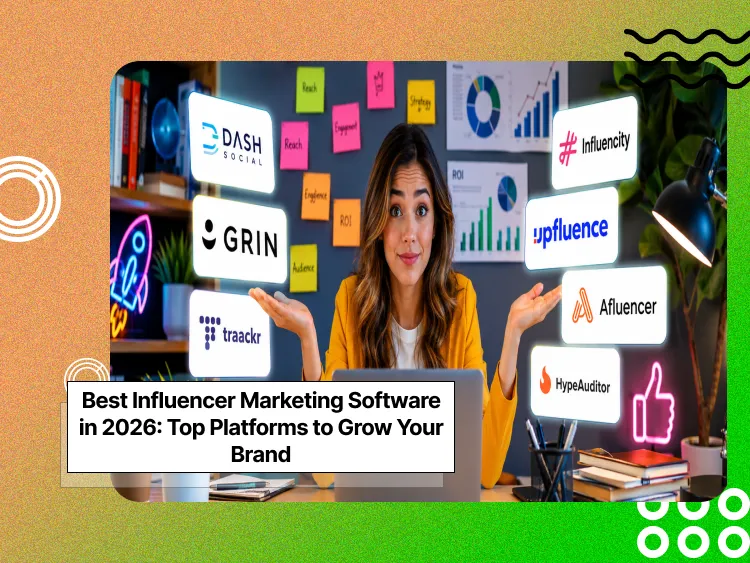
Influencer marketing used to feel optional, something you tried after you’d “done” everything else. Now it’s often the first place customers hear about a brand.
The problem most teams hit is not “Should we work with creators?” but “How do we manage all of this without losing our minds?” That’s where the right software starts to matter.
Instead of living in spreadsheets and DMs, a good platform helps you actually find the right creators, keep every collaboration on track, and see which posts are driving sales instead of just likes.
Buy an Established Instagram Account
Skip starting from zero. Browse Instagram/TikTok accounts with audiences across many niches.
See Available AccountsIn many industries, brands that get this right see several dollars back for every $1 they put into influencer campaigns, but that only happens when you have tools that support smart targeting, tracking, and testing, not just a few big-name creators on your roster.
In this guide, we’ll walk through the influencer marketing software options brands should seriously consider right now and show how each one can help them find creators, run smoother campaigns, and measure real results.
Why Influencer Marketing Software Is Essential in 2026
Modern influencer marketing platforms now automate much of the work, saving time while improving campaign performance.
These tools help brands:
- Identify authentic influencers whose audiences actually match target customers, with micro-influencers often driving higher engagement than celebrity accounts.
- Streamline communication and content approval so teams can manage dozens or even hundreds of creator relationships without losing the personal touch.
- Track performance well beyond basic likes and comments, with data on sentiment, conversions, and revenue to show the real impact of each partnership.
Without specialized software, it is hard to scale influencer programs and keep quality under control; the right platform becomes a central hub that turns influencer marketing from guesswork into a measurable, repeatable system.
Key Features to Look for in Influencer Marketing Software

When choosing influencer marketing software, focus on features that help you find the right creators, protect your budget, and prove ROI.
- Influencer discovery: A large, searchable database with filters for audience demographics, engagement rates, content style, and past brand collaborations, ideally with AI-assisted matching.
- Fraud and brand-safety tools: Detection for fake followers and bot engagement, audience authenticity scoring, and risk flags for unsafe or non-compliant content.
- Campaign and workflow management: Centralized briefs, content approvals, task management, and payment tracking so you can run multiple campaigns without spreadsheets.
- Relationship management: Profiles for each creator, communication history, and performance notes to support long-term partnerships instead of one-off deals. Our influencer contract template guide highlights the key clauses every brand should include in partnerships.
- Analytics and attribution: Dashboards that connect influencer content to reach, engagement quality, clicks, conversions, and revenue, not just likes and views.
- Compliance and monitoring: Features that help ensure proper FTC-style disclosures and track live content for missing or unclear labels.
- Integrations: Native connections to your e-commerce, CRM, analytics, and paid media tools, plus API access if you need custom reporting.
How Automation Transforms Influencer Campaigns
Automation is one of the biggest shifts in influencer marketing technology today.
Modern platforms use AI and machine learning to:
- Predict campaign performance by analyzing historical data and patterns to forecast likely reach, engagement, and ROI before you spend.
- Identify ideal influencers using detailed audience matching instead of relying only on content themes or follower counts.
- Optimize posting schedules by learning when your target audience is most active and likely to respond.
- Generate performance insights in real time, highlighting what is working and suggesting adjustments to content, timing, or creators.
Automation does not replace human creativity or relationships; it supports them by taking over repetitive tasks and surfacing data-driven guidance so teams can focus on strategy and collaboration.
Leading Influencer Marketing Platforms for Larger Brands in 2026
We reviewed 20+ influencer marketing tools, looking at feature depth, pricing transparency, integrations, and real user feedback from brands and agencies.
We also prioritized platforms that support AI-powered discovery, robust analytics, and clear compliance features, since these matter most for scalable influencer programs in 2026.
The following platforms offer advanced features and pricing aimed at mid‑market and enterprise teams that need deep analytics, automation, and integrations.
HypeAuditor
The platform’s AI-powered algorithms analyze over 20 metrics to identify suspicious followers and engagement patterns.
Key strengths
- Detailed audience demographics and authenticity scoring
- Predictive performance metrics based on historical data
- Competitive benchmarking against similar brands
Top brands like L’Oréal and Unilever use HypeAuditor to ensure they partner with influencers who have genuine connections with their followers.
Pros:
- Advanced AI algorithms analyze over 20 metrics for influencer authenticity.
- Predictive performance metrics based on historical data.
- Competitive benchmarking against similar brands.
Cons:
- Pricing may be on the higher side for small businesses.
- Some users report a steep learning curve for new users.
Afluencer
Afluencer is a comprehensive influencer marketing platform designed to streamline the process of finding, collaborating with, and managing influencers. It offers a vast database of influencers across various niches, enabling brands to connect with the right partners efficiently.
Key strengths:
- Extensive influencer database across multiple niches
- Advanced search filters for precise influencer discovery
- Campaign management tools for seamless collaboration
It’s the best choice for brands seeking a user-friendly platform to manage influencer relationships and campaigns effectively.
Pros:
- Built-in communication tools streamline collaboration between brands and influencers.
- Affordable pricing plans compared to many enterprise-level influencer software options.
Cons:
- Limited advanced analytics compared to high-end platforms like CreatorIQ or Traackr.
- Smaller enterprise feature set, making it less ideal for large corporations managing global campaigns.
CreatorIQ
Its comprehensive platform integrates with your existing marketing tech stack to create a seamless workflow.
Key strengths:
- Advanced workflow automation for managing large-scale campaigns
- Payment processing and tax compliance built-in
- Custom API integrations with e-commerce and CRM systems
- Multi-team collaboration tools for global brands
CreatorIQ excels for larger organizations managing complex influencer programs across multiple markets, products, and teams. Its robust permissions system and approval workflows ensure consistency while allowing for regional customization.
Pros:
- Seamless integration with existing marketing tech stacks.
- Advanced workflow automation for managing large-scale campaigns.
- Built-in payment processing and tax compliance.
Cons:
- It may be complex for brands with simpler needs.
- Customer support response times can be inconsistent.
Upfluence
Upfluence differentiates itself with one of the largest searchable databases of influencers! It includes over 3 million profiles across Instagram, YouTube, Twitter, TikTok, Twitch, etc.
Key strengths:
- Advanced search filters with over 20 criteria
- Live campaign performance dashboards
- Integrated influencer outreach and relationship management
- E-commerce integration with Shopify and other platforms
Upfluence is strong for brands looking to discover niche influencers in specialized markets or industries.
Pros:
- Extensive influencer database with over 3 million profiles.
- Advanced search filters with over 20 criteria.
- Integrated influencer outreach and relationship management.
Cons:
- Some users experience glitches and underdeveloped features.
- Customer support is reported to be lacking in responsiveness.
Since Upfluence is especially strong for YouTube creator discovery, you can also explore our guide on how to find YouTube influencers to refine your search and outreach strategy.
Influencity
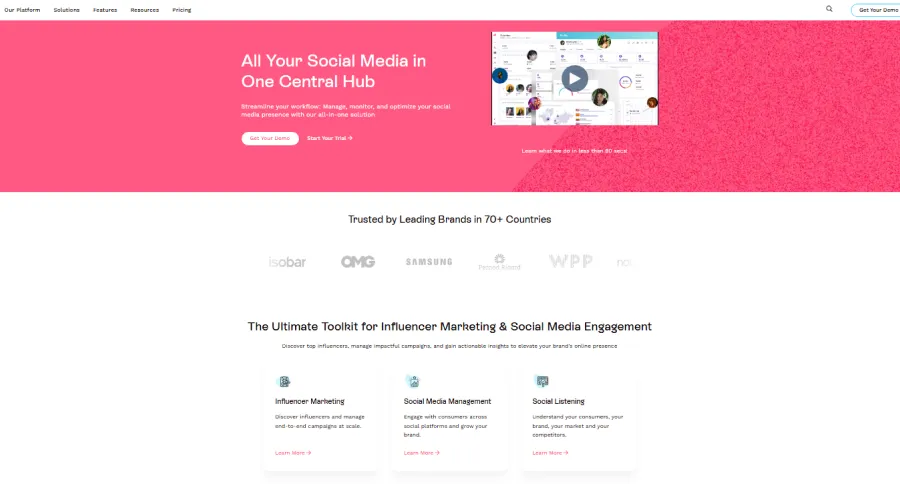
Influencity is an all-in-one influencer marketing platform that provides tools for influencer discovery, campaign management, and performance analytics. It aims to simplify the influencer marketing process and help brands achieve measurable results.
Key strengths:
- Comprehensive influencer discovery and analytics tools
- Campaign management features for efficient collaboration
- Performance tracking to measure campaign success
Ideal For: Brands looking for a data-driven approach to influencer marketing.
Pros:
- Powerful influencer discovery engine with detailed filters for demographics, engagement, and audience insights.
- Comprehensive analytics dashboard that tracks performance across multiple platforms in real time.
- Customizable reporting options make it easy to present campaign results to stakeholders.
Cons:
- Limited social platform coverage compared to enterprise competitors like CreatorIQ.
- Occasional lag in real-time data updates when managing multiple simultaneous campaigns.
AspireIQ
AspireIQ (formerly Revfluence) focuses on making content collaboration seamless between brands and creators. The platform stands out for its content-first approach to influencer relationships.
Key strengths:
- Content library management for repurposing influencer assets
- Automated brief creation and assignment
- Rights management tracking and documentation
- Influencer community-building tools
Brands like Dyson and Hello Fresh rely on AspireIQ not just for influencer campaigns but for generating creator-driven content that can be repurposed across all marketing channels.
Pros:
- Focuses on content collaboration between brands and creators.
- Content library management for repurposing influencer assets.
- Automated brief creation and assignment.
Cons:
- Pricing may be higher compared to other platforms.
- Some users find the interface less intuitive.
Traackr
Traackr pioneered influencer relationship management and continues to lead with its data-centric approach. The platform is designed for sophisticated marketers needing comprehensive market intelligence and campaign management.
Key strengths:
- Brand vitality scoring and benchmarking
- Historical performance tracking over multi-year periods
- Audience interest mapping across topics and affinities
The platform’s market intelligence helps inform overall strategy beyond individual partnerships.
Pros:
- Comprehensive market intelligence and campaign management.
- Brand vitality scoring and benchmarking.
- Audience interest mapping across topics and affinities.
Cons:
- Lacks some campaign management features like influencer outreach.
- Pricing may be too high for brands with limited budgets.
Grin
Grin has carved out a specialized niche serving direct-to-consumer brands with deep e-commerce integration. The platform connects directly with your online store to track influencer impact on sales.
Key strengths:
- Native integration with Shopify, WooCommerce, and Magento
- Affiliate link generation and tracking
- Influencer discount code management
- Product sample fulfillment tracking
Brands like MVMT Watches and Warby Parker use Grin to create direct connections between influencer content and purchase behavior.
Pros:
- Deep e-commerce integration with platforms like Shopify.
- Affiliate link generation and tracking.
- Influencer discount code management.
Cons:
- Some users report glitches and underdeveloped features.
- Customer support is often described as unhelpful.
Dash Social
Dash Social is a platform that offers a suite of tools to help brands manage their influencer marketing efforts. It provides features for influencer discovery, campaign management, and performance tracking.
Key strengths:
- Tools for efficient influencer discovery and outreach
- Campaign management features for seamless execution
- Performance tracking to assess campaign effectiveness
Best for brands seeking an all-in-one solution for their influencer marketing needs.
Pros:
- An all-in-one platform that combines influencer discovery, outreach, and performance analytics in one place.
- User-friendly interface designed for marketers with varying levels of technical expertise.
- Real-time performance tracking enables brands to adjust campaigns for better outcomes.
Cons:
- Limited influencer database compared to larger, more established platforms.
- Fewer automation options for outreach and reporting than premium competitors.
Klear
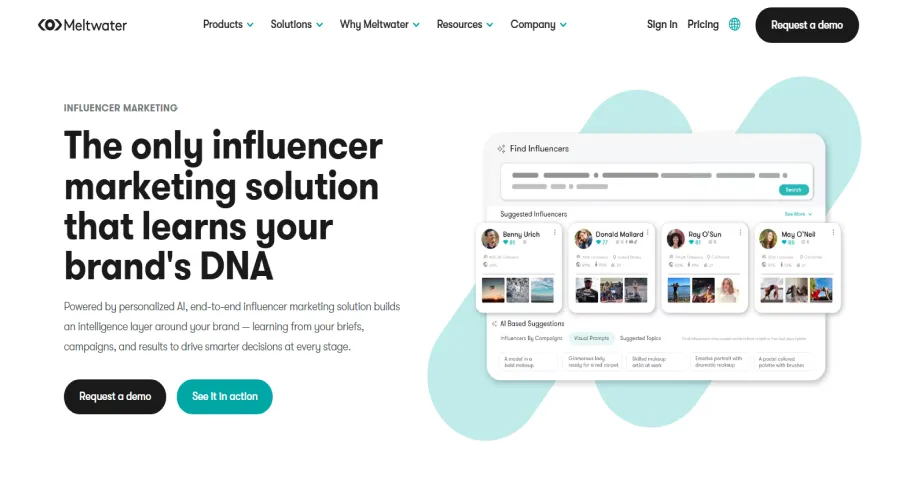
Klear leverages advanced artificial intelligence to provide psychographic insights and predictive performance metrics. Its technology analyzes both visual content and text to understand influencer alignment.
Key strengths:
- AI-driven personality analysis of influencer content
- Visual recognition technology for brand safety monitoring
- Audience interest clustering beyond basic demographics
- True reach calculation accounting for algorithm impacts
Klear’s sophisticated analysis helps brands like Adidas and Coca-Cola find influencers who match their brand values, not just demographic targets.
Pros:
- AI-driven personality analysis of influencer content.
- Visual recognition technology for brand safety monitoring.
- Audience interest clustering beyond basic demographics.
Cons:
- Pricing may be prohibitive for smaller brands.
- Some users find the platform’s learning curve steep.
Budget-Friendly Influencer Marketing Software for Growing Brands
Not every brand needs (or can afford) enterprise-level platforms. Fortunately, several powerful solutions cater specifically to growing businesses with more limited budgets.
5 Affordable Platforms with Powerful Capabilities
If your brand isn’t ready for enterprise-level influencer marketing software just yet, these affordable tools strike a great balance between cost and functionality, offering reliable influencer discovery, campaign management, and analytics without breaking the budget.
Heepsy
It offers robust influencer discovery and analysis starting at $49/month. The platform specializes in Instagram influencers but has expanded to include YouTube and TikTok. Key features are fraud detection, audience demographics, and basic campaign management.
Pros:
- Affordable entry price (starter plan at ~$69/month), so accessible for smaller brands.
- Strong search filters (location, category, follower count) and good for influencer discovery across Instagram, TikTok, and YouTube.
Cons:
- Features and usage limits are modest at the lowest tiers (fewer analytics, fewer contacts allowed), which may restrict scale.
- Some reviewers mention that the database or functionality can feel limited compared to higher-end platforms.
If you’re new to influencer outreach, you can check out our detailed guide on finding and hiring the right influencers to make the most of discovery tools like Heepsy.
Modash
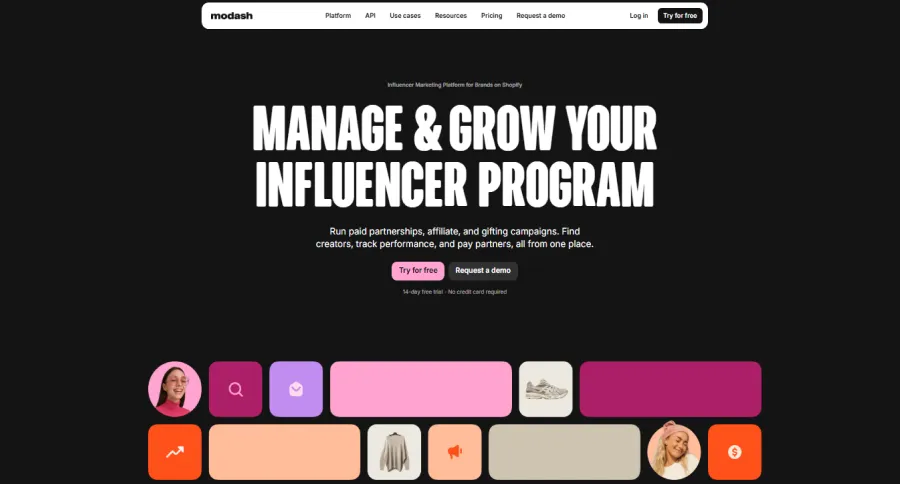
At $99/month for basic packages, Modash provides excellent value with powerful discovery tools and performance analytics. The platform excels at identifying micro-influencers with high engagement rates and offers detailed audience demographic breakdowns without requiring influencer opt-in.
Pros:
- Good for influencer discovery with robust data: large searchable creator database, audience demographics, and affiliate/tracking support.
- Built-in tools for campaign tracking (including content, code redemptions) and e-commerce integration (especially for Shopify), which adds value for commerce-driven brands.
Cons:
- Some users report that while discovery features are strong, deeper analytics or full campaign workflow capabilities may be weaker compared to premium platforms.
BuzzSumo
Starting around $99/month, BuzzSumo isn’t exclusively an influencer platform but offers excellent content discovery and influencer identification tools. Its content analysis helps brands find trending topics and the content creators driving conversations in specific niches.
Pros:
- Offers influencer discovery as part of a broader content & influencer marketing tool set, good for brands wanting a combo of content + influencers.
- Familiar with UI and strong in content research/outreach, which can complement influencer work.
Cons:
- Pricing for full influencer features is higher than some pure influencer tools; potentially less budget-friendly for very small brands.
NeoReach
With starter plans under $300/month, NeoReach brings enterprise-grade analytics to smaller brands. The platform offers excellent campaign ROI tracking and performance benchmarking against industry standards.
Pros:
- Strong platform with high-end influencer marketing capabilities, good for brands ready to invest more, but sometimes labeled as budget-friendly in your list (depending on plan).
Cons:
- Even though it appears in the “budget-friendly” section in your article, its pricing and complexity lean more enterprise than a small brand.
- It might be overwhelming or over-featured for smaller brands with simpler needs and smaller budgets.
Tagger Media
Though slightly higher priced than others in this category, Tagger offers flexible packages starting around $500/month with enterprise-level features scaled for growing brands. Its social listening capabilities and campaign management tools rival much more expensive platforms.
Pros:
- Robust influencer discovery and audience insights (demographics, affinities, overlap).
- Customizable dashboards and exportable reports for stakeholders and agencies.
- Good for brands that want enterprise features without full-enterprise pricing tiers.
Cons:
- It can be feature-heavy and potentially overwhelming for grassroots programs or single-person teams.
- Some advanced features are gated behind higher-tier plans or custom pricing.
These affordable options deliver core functionality without the premium price tags, making them ideal starting points for brands building influencer programs.
Free Alternatives: What Can You Accomplish?
Even with zero budget, brands can leverage these free tools to support basic influencer marketing efforts:
Platform-native search tools: Instagram, TikTok, and YouTube all offer free search capabilities to identify creators in your niche using relevant hashtags and keywords.
Google Alerts and social listening: Set free alerts for your brand, products, and industry terms to identify creators already mentioning you.
Hashtagify: The free version offers basic hashtag analysis to find trending topics and associated content creators.
SparkToro: Limited free searches help identify influential voices in specific topic areas across social platforms and websites.
Excel or Google Sheets: While manual, spreadsheets can track basic outreach, content schedules, and simple performance metrics.
Free tools require significantly more manual effort but can help brands test influencer marketing before investing in paid solutions. The data and processes you develop with these tools will make eventual software implementation more effective.
Best Value Software for Small Business Campaigns
For small businesses seeking the best return on software investment, these platforms offer exceptional value:
- Influential: With plans starting around $200/month, Influential provides AI-powered matching between brands and mid-tier influencers, with excellent audience demographic analysis.
- Hypetrace: At approximately $150/month, this platform specializes in micro-influencer discovery with strong fraud detection and campaign performance tracking.
- Dovetale: Recently acquired by Shopify, Dovetale offers specialized tools for e-commerce brands starting around $99/month, with excellent conversion tracking.
Strong discovery and basic performance tracking benefit most small businesses, while workflow automation becomes more valuable as programs scale.
Tips to Choose the Right Influencer Software for Your Brand
Selecting the ideal platform requires understanding your needs, existing technology, and growth trajectory.
Understand Your Influencer Marketing Goals
Take a step back and assess where your influencer program stands and what you need right now:
- Discovery: If you’re still growing your network, go for platforms with large influencer databases and easy search features.
- Relationship Management: If you’ve got strong influencer ties, pick tools with good CRM and communication features.
- Measurement: If proving ROI is tough, choose platforms with solid analytics and tracking tools.
- Content Amplification: If you’re spreading influencer content across channels, look for tools with good content rights management and repurposing options.
Check Compatibility with Your Existing Marketing Tech
Your influencer platform doesn’t exist in isolation. Consider how it will integrate with:
- Social media management tools: Does the platform connect with your existing social listening and publishing software?
- Content management systems: Can influencer assets be easily imported into your CMS for website use?
- E-commerce platforms: Will the software track purchases originating from influencer content?
- Analytics solutions: Can campaign data flow into your broader marketing dashboards?
- CRM systems: Will influencer relationships connect with your customer database?
Build a Scalable Influencer Marketing Strategy
Even if your current program is modest, select software that can grow with your ambitions:
- User seats and permissions: Does pricing allow adding team members as your department grows?
- Campaign volume: Are there limitations on how many campaigns or influencers you can manage?
- Reporting customization: Can analytics evolve as your measurement needs become more sophisticated?
- Global capabilities: If expansion is in your future, does the platform support multiple languages, currencies, and regional compliance requirements?
- API access: Connecting with custom internal systems is increasingly important for larger organizations.
The cost of switching platforms mid-program can be substantial, both financially and in terms of lost historical data. Investing in a somewhat more advanced platform than your current needs might save significant resources in the long run.
Ensure It Can Generate Meaningful Campaign Performance Reports
Software should transform complex data into actionable insights through:
- Competitive benchmarking: Comparing your performance against industry standards and competitors.
- Trend identification: Spotting patterns across campaigns to inform future strategy.
- Recommendation engines: Providing AI-powered suggestions for improving performance.
- Exportable formats: Creating presentation-ready reports for sharing with broader marketing teams.
Effective reporting features save hours of manual analysis while providing deeper insights than human review alone could generate.
Engagement Metrics That Matter for Brands

Look beyond vanity metrics to measure what truly indicates business impact:
Engagement quality analysis: Differentiating between passive likes and meaningful interactions that indicate genuine interest.
Sentiment tracking: Evaluating the emotional tone of audience responses to sponsored content.
Audience growth attribution: Measuring how influencer partnerships affect your owned social channels.
Content saving metrics: Tracking when users save content for future reference (often indicating purchase intent).
Comment analysis: Using natural language processing to identify questions, purchase intent, and product feedback in comments.
The best platforms automatically highlight these meaningful metrics rather than overwhelming you with data points that don’t connect to business outcomes.
Future Trends in Influencer Marketing Software Development
Understanding upcoming trends helps brands select platforms with future-proof capabilities.
AI and Machine Learning in Influencer Identification
Artificial intelligence is revolutionizing how brands find and evaluate potential partners:
- Predictive performance models: AI systems now analyze thousands of past campaigns to predict how specific influencer partnerships will perform before launching.
- Content analysis: Machine learning examines visual elements, caption sentiment, and audience responses to identify ideal brand-influencer matches.
- Audience affinity prediction: Advanced algorithms identify unexpected audience interests that create new partnership opportunities.
- Fraud prevention: AI systems detect increasingly sophisticated fake engagement tactics by analyzing patterns invisible to human reviewers.
Platforms investing heavily in AI capabilities will likely maintain competitive advantages as influencer marketing grows more data-driven.
Implementation of Social Commerce Features
The line between influencer content and shopping experiences continues to blur:
- In-app purchasing: Leading platforms now integrate with Instagram Shopping, TikTok Shop, and other native commerce features.
- Live shopping event management: Tools for coordinating influencer-hosted shopping livestreams with integrated checkout.
- Product tagging workflows: Streamlined processes to ensure influencers correctly tag products in shoppable posts.
- Inventory synchronization: Advanced systems that prevent influencers from promoting out-of-stock items.
Case Studies: Brands Transforming Through Influencer Software
Examining real-world implementation helps contextualize how these tools drive measurable business impact.
Example 1: Gymshark’s Scaled Ambassador Program
By implementing automated workflow management, the brand scaled from dozens to hundreds of ongoing influencer relationships while maintaining consistent messaging and performance tracking.
Example 2: Sephora’s Micro-Influencer Strategy
The platform’s discovery tools help Sephora identify emerging beauty creators before they reach mainstream popularity. A detailed audience demographic analysis ensures that selected influencers reach Sephora’s target customer segments with minimal overlap, maximizing the program’s total reach.
Example 3: Adobe’s B2B Influencer Approach
Adobe leveraged Upfluence, a leading influencer marketing software, to optimize its B2B campaigns.
The platform’s content performance analytics help Adobe optimize its briefing strategy, focusing influencer content on specific product features that drive trial downloads.
These examples demonstrate how different brands adapt influencer technology to support their specific business models and marketing objectives.
Lessons Learned from Successful Campaign Management
Brand success stories reveal common implementation best practices:
- Start with clear objectives: Define measurable goals before selecting a platform or launching campaigns.
- Proper training: Ensure your team fully understands the platform’s capabilities through comprehensive onboarding.
- Begin with pilot programs: Test new software with smaller campaigns before full-scale implementation.
- Customize workflows: Adapt the platform’s features to match your existing processes rather than forcing immediate change.
- Review and optimize regularly: Schedule quarterly platform usage reviews to ensure you utilize all available features.
Conclusion
Choosing the right influencer marketing software is one of the fastest ways to improve ROI and build more authentic, long-term creator partnerships.
As you compare platforms, focus on the features that solve your current problems first, like discovery, workflow, or measurement, while making sure the tool can scale with your future goals.
With the right platform, clear objectives, and the right creators, influencer marketing becomes a repeatable growth channel instead of a one-off experiment.
If you are ready to go deeper, your next step is to shortlist 2–3 platforms from this guide and test them with a small, well-defined pilot campaign.
FAQs
How is AI changing influencer marketing software?
AI helps by automating influencer searches, predicting campaign performance, and personalizing content recommendations.
What are the key trends in influencer marketing software?
More AI-driven tools, better influencer discovery features, and advanced analytics.
Will influencer marketing platforms get more user-friendly?
Yes, you can expect simpler interfaces as platforms focus on streamlining processes.
Which is the most effective form of influencer marketing?
The most effective form of influencer marketing depends on your goals, but partnerships with micro-influencers lead to the best engagement.
What are the 3 R’s of influencer marketing?
Reach, Relevance, and Resonance: how many people you can reach, how well the audience matches your target, and how strongly the message connects.

Emi Daniel
Buy an Established Instagram Account
Skip starting from zero. Browse Instagram/TikTok accounts with audiences across many niches.
See Available AccountsRelated articles
-

The Ultimate Digital and Social Media Marketing Playbook: From Basic to Advanced Tactics
Are you tired of trying different methods and realizing your brand doesn’t get the attention it deserves? If so, you need to come up with the right…
23 min readEmi Daniel
-
Social Media Competitor Analysis: Tools, Benchmarks, and Strategy Guide
Are you getting fewer likes lately? You’re not alone. On Instagram, the average engagement dropped to about 0.45% in 2025, down 24% from last year. Still, the…
26 min read -

Social Media Management for Small Businesses (2026): Proven Strategies That Work
Did you know that 97% of small businesses use social media? But that’s not my point! The fact is that only 23% of them see a significant…
15 min read