


Whether social media impacts SEO has been debated for years, and the answer isn’t a simple yes or no.
Sharing content on platforms like Instagram, TikTok, or X (Twitter) doesn’t directly improve Google rankings, but social media impacts SEO in indirect yet powerful ways by driving traffic, earning backlinks, and building brand authority.
That’s why marketers now view social media impacts on SEO as a key part of a complete digital strategy.
Buy an Established Instagram Account
Skip starting from zero. Browse Instagram/TikTok accounts with audiences across many niches.
See Available AccountsThis guide separates myths from facts and shows proven ways to use social media to strengthen your search visibility and long-term results.
What You’ll Learn About the Relationship Between Social Media and SEO
Understanding how social media impacts SEO starts with separating facts from common myths.
You’ll see how platforms like TikTok, Instagram, and LinkedIn influence search performance, not through direct ranking boosts, but by driving visibility, backlinks, and traffic that strengthen your site’s authority.
This section also highlights proven tactics and real-world examples that show how aligning social and search strategies can deliver measurable growth.
The Complex Relationship Between Social Media and SEO
Social media may not directly boost Google rankings, but when it comes to content visibility, its role in modern SEO strategies is hard to ignore.
Google’s Official Position on Social Signals
Back in 2014, Matt Cutts explained that social shares don’t directly influence search rankings. More recently, John Mueller, Google’s Search Advocate, has repeated the same point.
The reasons are mostly technical:
- Many platforms block search engines from crawling their content.
- Privacy settings limit how much data is accessible.
- Social engagement changes too quickly for Google’s algorithms to process consistently.
For example, Google can’t reliably count Facebook posts or Twitter shares. Each platform controls what information it allows search engines to see.
Direct vs. Indirect SEO Impact Framework
Research shows top-performing content earns both strong search rankings and high social shares. It’s not the whole story, as it’s not a cause-and-effect relationship.
Both outcomes usually stem from the same factors:
- High-quality content
- Engaged audiences
- Strong brand authority
This is where the indirect benefits come in. Social media helps SEO by:
- Expanding reach and content discovery
- Building brand signals
- Driving traffic that can turn into leads, customers, or backlinks
How Search Engines Process Social Content
Most social platforms add a “nofollow” attribute to links, which means they don’t pass traditional link authority. Even so, those links still bring referral traffic and increase brand awareness.
Indexing also depends on platform policies:
- Public posts are more likely to show up in search results.
- Private or restricted posts remain invisible to Google.
While the social activity itself doesn’t directly improve rankings, the brand visibility it creates leads to:
- More people are searching for Netflix titles
- Higher website visits
- Greater overall brand authority
Faster Indexing: How Social Sharing Helps Search Engines Find Your Content
Even though social activity doesn’t directly improve rankings, sharing content consistently creates more opportunities for Google to crawl and index your pages.
Social sharing can also generate referral links, brand mentions, and discussions across forums and communities, all of which can indirectly improve SEO by increasing visibility, authority, and engagement signals.
Actionable tip for pro users: Post new content on your active social channels within the first 24 hours of publishing. Encourage shares and engagement to speed up indexing and expand your content’s reach.
Social Media SEO Myths: Comprehensive Debunking
While many believe social media influences search rankings, understanding the truth behind social media SEO myths is essential for developing effective strategies and maximizing online visibility.
Ready to discover these myths? Here are five of them:
Myth #1: Social Shares Are Direct Ranking Factors
This myth exists despite clear evidence to the contrary. Google’s algorithm documentation shows no direct ranking boost from social shares, and multiple studies by Moz, Hootsuite, and SearchEngineLand confirm this finding.
The correlation between shares and rankings exists for different reasons; popular content naturally attracts both social engagement and backlinks, and quality content resonates with audiences across multiple channels.
High-performing content succeeds because it provides value; it answers questions, solves problems, or entertains audiences. These qualities drive both social sharing and link-earning behavior.
Myth #2: Follower Count Directly Improves SEO
Follower count alone means nothing for SEO, and bought followers, inactive accounts, and irrelevant audiences provide zero value. Search engines don’t access private follower data from most platforms.
Did you know that quality engagement matters more than vanity metrics? A small, engaged audience creates more value than thousands of inactive followers, which is why micro-influencers often generate better results than accounts with massive followings.
Brand authority develops through meaningful interactions. Relevant conversations, helpful responses, and valuable content build genuine influence. This authority translates into brand searches and website visits.
Myth #3: All Social Platforms Provide Equal SEO Value
Different platforms offer varying SEO benefits based on their policies and features. For example, YouTube provides the most direct value through video content indexing, while LinkedIn articles appear in professional search results.
Platform-specific differences matter significantly. How? Let’s find out:
- Instagram focuses on visual discovery.
- Twitter excels at real-time content promotion.
- Facebook serves local business discovery best.
Industry relevance affects platform value too; LinkedIn works better for B2B companies, Instagram suits visual brands perfectly, and TikTok reaches younger demographics effectively.
Myth #4: Social Media Provides Instant SEO Results
SEO benefits from social media, but it takes time to develop. Immediate results include referral traffic and brand awareness; long-term benefits like improved domain authority require months of consistent effort.
Building genuine communities takes patience: Authentic relationships don’t develop overnight, and quality content libraries grow gradually through consistent publishing.
Finally, timeline expectations should be realistic. Quick wins happen within weeks; however, substantial SEO improvements typically require 6–12 months of strategic social media marketing.
Myth #5: More Posts Always Mean Better SEO Performance
Posting frequency doesn’t guarantee SEO success; platform algorithms favor engagement over quantity. One viral post creates more value than dozens of ignored updates.
Content quality determines performance on all platforms. Well-researched, valuable posts outperform frequent but shallow content. Audiences prefer helpful information to constant promotion.
Strategic posting optimization beats random frequency, as understanding your audience’s online habits helps with timing. Quality content consistently performs the best long-term.
Supporting Research:
- Cognitive SEO found 23% variance in social signal impact across different industries.
- Stone Temple Consulting showed no direct correlation between shares and search rankings.
- Backlink’s analysis of 11.8 million Google search results confirmed indirect relationship patterns.
Proven Facts: How Social Media Actually Drives SEO Success
Over myths, social media does make a meaningful contribution towards driving SEO success through amplifying content, building brand authority, generating backlinks, and driving user behavior through digital channels.
Brand Authority and Entity Building
Google puts a lot of weight on what it calls E-A-T: expertise, authoritativeness, and trustworthiness. That means Google wants to rank brands people can trust.
Social media plays a big part here because it’s where you can show consistent thought leadership, share your knowledge, and engage with your community.
Mentions matter too; even if someone doesn’t link to your site, when your brand keeps popping up on different platforms, it sends signals to search engines. Those “entity signals” help Google connect the dots and understand that your brand is relevant in its space.
Link Building and Digital PR Opportunities
One of the biggest perks of social media is the way it helps you connect with people. Journalists, bloggers, other website owners, and fellow creators, you meet them all online. And when those relationships click, they often turn into natural link-building opportunities down the road.
A lot of collaborations start this way. Maybe you comment on someone’s post, join a discussion, or share their work. That little interaction can open the door to partnerships, guest posts, or content swaps you might never have found otherwise.
Social media also plays a role in protecting your brand’s reputation. If a negative story pops up in search results, an active, positive social presence can help balance the narrative.
User Engagement and Behavioral Signals
Traffic from social media often performs better than other sources. People who come from these platforms are usually already interested in what you’re sharing, so they tend to engage more with your site.
Targeting helps a lot. When users interact with your posts on social media, they’re already curious about your topic or industry.
Even dwell time gets a boost. Followers who know your brand are more likely to stick around and read your content, since they already have some context before arriving.
How Social Media Profiles Rank in Google Search
Social media profiles often appear directly in Google search results for brand names, products, or key topics.
While these profiles don’t directly improve your website’s rankings, they strengthen your overall online presence and signal authority to both users and search engines.
Keep your profiles updated, optimize bios with relevant keywords, and post consistently. Strong social profiles not only capture organic search traffic but also support your content’s visibility and authority in Google’s eyes.
Local SEO and Geographic Targeting
Local businesses gain significant SEO benefits through social media presence, as consistent business information across platforms helps with local search rankings.
Besides, customer review generation happens naturally through social media engagement, because happy customers often leave reviews after positive social interactions.
Community engagement builds local authority, and participating in local conversations and events through social media strengthens your connection to your geographic area.
Content Freshness and Trending Topics
Real-time content optimization opportunities arise through social media monitoring; trending topics and hashtags provide content ideas that align with current search demand.
Trending hashtag identification helps create timely content. When you publish content around trending topics, it has better chances of gaining traction in both social and search results.
News jacking through social media can drive immediate traffic spikes. Quick responses to breaking news or trends often generate significant engagement and website visits.
Detailed Case Studies:
Buffer’s transparency in sharing revenue and growth metrics on social media has built trust and authority. This approach correlates with strong organic search performance for business-related keywords.
Patagonia’s social activism content generates significant engagement and brand searches. Their environmental stance creates passionate communities that actively search for and share their content.
Real-World Examples: How Brands Use Social Media to Drive SEO
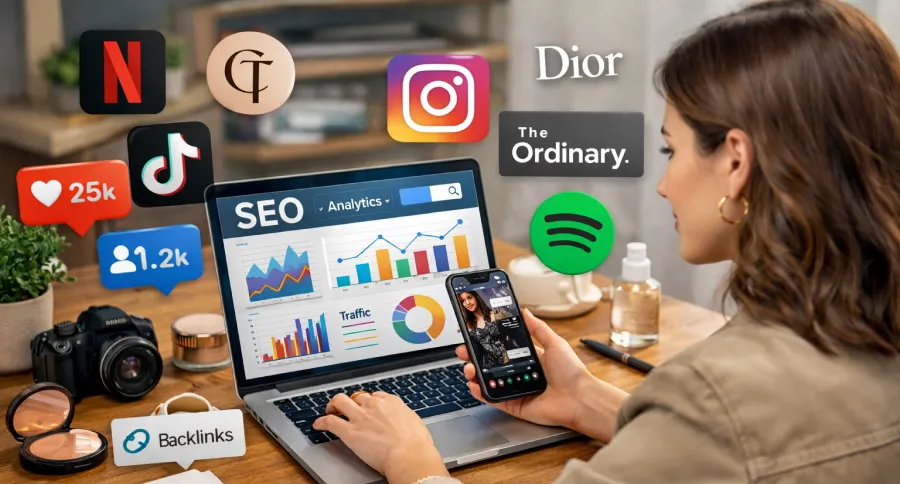
Leading brands are leveraging social media not just for engagement but as a strategic tool to enhance their SEO performance. By aligning social content with SEO goals, these companies are amplifying their online presence and driving measurable results.
1. Netflix: Amplifying Content Reach
Netflix utilizes platforms like Instagram and TikTok to promote original content, leading to increased search interest and higher organic traffic to their site. This strategy enhances brand visibility and supports SEO objectives.
2. Charlotte Tilbury: Engaging Content Creation
Charlotte Tilbury’s creative campaigns on social media platforms have not only boosted brand awareness but also contributed to improved search rankings by driving traffic and generating backlinks.
3. The Ordinary: Purpose-Driven Engagement
The Ordinary focuses on affordability and social storytelling, maintaining purpose-driven engagement that resonates with audiences and supports SEO through increased user interaction and content sharing.
4. Dior: Influencer Collaborations
Dior’s collaborations with influencers during Fashion Month Spring/Summer 2026 generated significant earned media value, enhancing brand authority and indirectly benefiting SEO through increased online discussions and backlinks.
5. Spotify: Creator Partnerships
Spotify’s partnerships with creators have led to increased brand mentions and engagement, contributing to SEO success by enhancing brand authority and driving traffic.
6. H&M: Accessibility and Cultural Relevance
H&M’s focus on accessibility and cultural relevance in their social media campaigns has resonated with audiences, driving traffic and indirectly benefiting SEO.
These examples demonstrate that integrating social media strategies with SEO objectives can lead to enhanced brand visibility, increased traffic, and improved search rankings. By aligning content creation, audience engagement, and brand authority efforts across platforms, brands can effectively leverage social media to drive SEO success.
Platform-Specific SEO Strategies and Optimization
Here are tips and strategies to use each platform in the right way:
Facebook SEO Optimization Tactics
If you are a creator, business owner, or influencer on Facebook, you should know that Facebook Business Pages provide local SEO benefits through consistent NAP. What is that? It refers to Name, Address, and Phone information. Complete business profiles help with local search visibility.
Facebook Groups create niche community authority. Active participation in relevant groups positions you as an industry expert and drives qualified traffic to your website.
Facebook Live videos often receive priority in the platform’s algorithm. Live content can drive immediate engagement and traffic spikes to your website.
Twitter Real-Time SEO Applications
Twitter moves quickly. That’s the whole point of it, and it’s also why it’s useful for SEO. The thing is that if you keep an eye on what’s trending, especially with hashtags, you’ll spot topics people are already searching for. Use the right tag, and your post has a better shot at being seen and shared.
Spaces is another angle; Hosting or even just talking in one can put you in front of a fresh audience. People who like what they hear often end up clicking through to your site.
And then there’s tweeting itself. Timing matters, so does adding the right hashtags, and a good visual never hurts. Put those together, and you’ve got tweets that don’t just sit there; they send traffic back your way.
LinkedIn Professional Network Advantages
What you need to know about LinkedIn network benefits:
- LinkedIn’s publishing platform allows long-form content that often ranks in search results.
- Professional articles on LinkedIn can generate significant organic traffic.
- Professional networking on LinkedIn facilitates high-quality link-building opportunities.
- LinkedIn Groups provide targeted audience engagement.
- Active participation builds professional authority and drives qualified B2B traffic.
Instagram Visual SEO Strategies
Instagram is built to share visual content, but it can do more than showcase pretty pictures; how come? It can give your SEO a real boost when you use it with intent.
Here’s how to make the most of it:
- Tap into Instagram Shopping: Tag your products and write clear, natural descriptions — or explore Social Tradia’s Instagram Marketplace for buying and selling accounts.
Done right, those tags can link into Google’s shopping results and put your products in front of people who may have never even visited your page.
- Work your hashtags: Not all hashtags are created equal. A little research goes a long way. The right mix helps your posts show up in searches and pulls in followers who care about your niche.
- Lean on Stories and Reels: Instagram pushes these formats harder than regular posts. That means they’re your best bet for quick engagement spikes and more eyes on your brand.
- Encourage UGC (user-generated content): When customers or fans share content about your brand, it works better than polished ads. Why? Because it builds trust, strengthens community, and in many cases, outperforms branded posts.
YouTube Search Engine Optimization
YouTube isn’t just a video platform; it’s the second-largest search engine in the world, right behind Google. That means the way you optimize your videos can directly influence how easily people find your content, both on YouTube itself and in Google search results.
Good YouTube SEO goes beyond uploading a video and hoping for the best. Titles, descriptions, tags, and even thumbnails all play a role in how your video is discovered.
When these elements are optimized properly, your videos have a much better chance of appearing in Google’s universal search results, giving you exposure on two major platforms at once.
And let’s not forget about YouTube Shorts. Short-form content is booming, and Shorts are designed to ride that wave. A well-made short video can pick up traction quickly, reach new audiences, and drive a noticeable bump in traffic.
TikTok and Emerging Platforms
TikTok has quickly become a major player in search visibility. Videos can show up in Google results, especially when paired with the right keywords and hashtags.
Key tactics include:
- Use keywords in captions so the content is searchable.
- Mix trending and niche hashtags to boost discoverability.
- Repurpose TikToks on Reels or Shorts for extra reach.
Emerging platforms like BeReal or Lemon8 may not impact SEO directly yet, but getting in early can build visibility and give you an edge as they grow.
Platform-Specific Statistics:
- YouTube has 2.7+ billion logged-in monthly users and functions as the world’s second-largest search engine.
- LinkedIn hosts 58.4 million company pages and leads B2B content consumption.
- Instagram boasts 2+ billion monthly users with 500+ million daily Stories users.
- TikTok reaches 1+ billion monthly users with rapidly growing search behavior patterns.
How to Measure the SEO Impact of Social Media (KPIs & Tools)
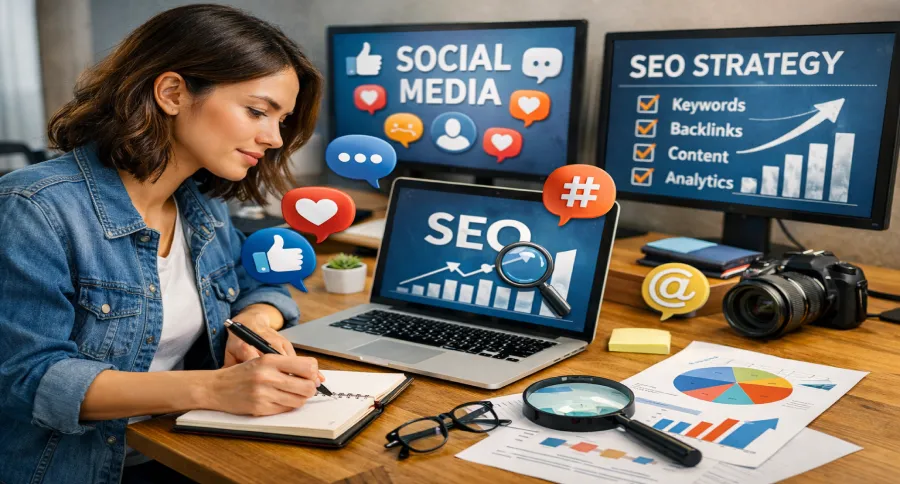
Measuring social media’s effectiveness goes beyond likes and shares; tracking KPIs, attribution models, and ROI is essential for understanding its true impact on SEO and overall digital performance.
Essential Key Performance Indicators (KPIs)
- Referral traffic quality from social platforms matters more than quantity. Monitor conversion rates, time on site, and pages per session for social media visitors.
- Brand mention volume and sentiment tracking reveal reputation improvements. Increased positive mentions often correlate with improved search visibility.
- Social share velocity indicates content performance potential. Content that gains shares quickly often performs well in search results, too.
- Engagement rate impact on brand search volume shows brand-building success. Higher social engagement typically leads to increased branded search queries.
Advanced Attribution Modeling Techniques
One of the biggest challenges in digital marketing is proving how social media actually drives results. That’s where advanced attribution modeling comes in. Instead of giving all the credit to the last click, multi-touch attribution shows the real role social media plays throughout the customer journey.
Often, a user might first discover your brand on Instagram, return later through Google, and finally convert after clicking an email. Without multi-touch attribution, that early social interaction gets overlooked.
With Google Analytics 4 (GA4), you can dig deeper into these patterns. GA4’s social media tracking and enhanced e-commerce reporting highlight how different platforms contribute to conversions and revenue.
Another powerful approach is cross-platform journey mapping. By tracking how users move between social channels and your website, you can see which touchpoints matter most.
Comprehensive Measurement Tools and Dashboards
- Google Analytics Social Reports: Track how much traffic is coming from social and see how those users behave once they land on your site.
- Custom Dashboards: Combine social and SEO data in one place for a big-picture view of performance.
- SEMrush Brand Monitoring: Spot social mentions and tie them directly to SEO metrics, helping you uncover hidden opportunities.
- Ahrefs Content Explorer: Compare social engagement with backlinks to see which content performs best across channels.
- Custom Reporting: Pull data from multiple tools into one report to clearly show social media’s overall impact on business goals.
ROI Calculation and Business Impact Assessment
Measuring the real impact of social media goes beyond tracking clicks and immediate conversions.
Here’s how to approach ROI and business impact effectively:
- Revenue Attribution: Use multi-touch attribution to understand how social media contributes across the entire customer journey, not just the last click.
- Cost-per-Acquisition (CPA) Comparison: Evaluate the cost of acquiring customers through social media versus other channels to optimize your marketing budget.
- Customer Lifetime Value (CLV): Social media engagement builds relationships that drive repeat business, often exceeding the value of a single conversion.
- Measurement Frameworks: Tools like the PESO model (Paid, Earned, Shared, Owned), social media funnel analysis, and cohort analysis help you evaluate campaigns comprehensively and track audience quality over time.
Actionable Implementation Checklist
Turning strategy into results requires a clear roadmap. This actionable checklist breaks down the immediate, short-term, and long-term steps you need to align social media with SEO and achieve measurable growth.
Immediate Actions (Week 1-2)
Start by auditing all existing social media profiles for SEO optimization opportunities. Check that your business information is consistent across all platforms.
Implement UTM tracking on all social media links immediately. This provides a baseline measurement for future optimization efforts.
Begin basic social listening for brand mentions and industry conversations. Identify immediate opportunities for engagement and relationship building.
Set up Google Analytics social media tracking and conversion goals. A proper tracking foundation enables accurate performance measurement.
Short-term Strategies (Month 1-3)
Develop an integrated content calendar that incorporates SEO keyword research into social media content planning. Align topics across channels for maximum impact.
Launch your first user-generated content campaign to build social proof and community engagement. UGC often outperforms branded content significantly.
Research and implement an advanced hashtag strategy for each platform you use. Platform-specific optimization improves discoverability and engagement.
Establish systematic influencer outreach for content amplification. Start with micro-influencers in your industry for cost-effective partnerships.
Long-term Growth Initiatives (Month 3-12)
Focus on building comprehensive social media communities around your brand. Engaged communities provide sustainable traffic and advocacy.
Develop consistent thought leadership content across platforms. Position your brand as an industry authority through valuable insights and commentary.
Create systematic approaches to earning links through social media relationships. Long-term relationship building pays dividends in link opportunities.
Conclusion
While social media may not directly boost Google rankings through likes, shares, or follows, its indirect SEO benefits are undeniable.
The key to success is recognizing that social media and SEO are not isolated tactics; they’re interdependent. When aligned strategically, they amplify one another, turning content into traffic, traffic into authority, and authority into sustainable growth.
Digital landscapes evolve quickly, with new platforms, algorithm updates, and user behaviors shaping the way visibility is earned.
Staying adaptable, prioritizing value-driven content, and building authentic relationships will ensure your brand thrives across both search and social.
In the end, businesses that treat social media as a core pillar of their SEO strategy, not just an add-on, will gain a lasting competitive edge. Focus on consistency, authenticity, and integration, and you’ll set the foundation for measurable, long-term success.
FAQs
Do social media shares directly improve my Google search rankings?
No. Shares don’t directly boost rankings, but they can lead to more backlinks, traffic, and mentions that indirectly help SEO.
Should I include keywords in my social media content for SEO purposes?
Yes, use them naturally in bios, posts, and hashtags. Focus on engagement first, not keyword stuffing.
What’s the biggest mistake businesses make with social media SEO?
Expecting instant ranking boosts. It’s a long game; valuable content and genuine engagement pay off over time.
How do algorithm changes on social platforms affect SEO benefits?
They can affect reach and engagement, but if you stick to authentic, valuable content and diversify platforms, you’ll stay stable.
Can social media help with local SEO for my business?
Definitely. Local pages, consistent info, community posts, reviews, and location-based hashtags all boost local SEO.

Emi Daniel
Buy an Established Instagram Account
Skip starting from zero. Browse Instagram/TikTok accounts with audiences across many niches.
See Available AccountsRelated articles
-

How to Go Viral on Instagram: A Practical Guide
A viral Instagram post can begin with something very simple, like a clear idea, a familiar feeling, or a moment that makes someone think, ‘I need to…
25 min readEmi Daniel
-
Meta Ad Library: How to Find and Analyze Competitor Ads
Some ads are easy to ignore until you notice the same brand appearing in your feed again and again. You may start wondering what they are saying,…
18 min read -
Best Influencer Marketing Software in 2026: Top Platforms to Grow Your Brand
Influencer marketing used to feel optional, something you tried after you’d “done” everything else. Now it’s often the first place customers hear about a brand. The problem…
18 min read